
Nalanda University – The Ancient Seat of Learning
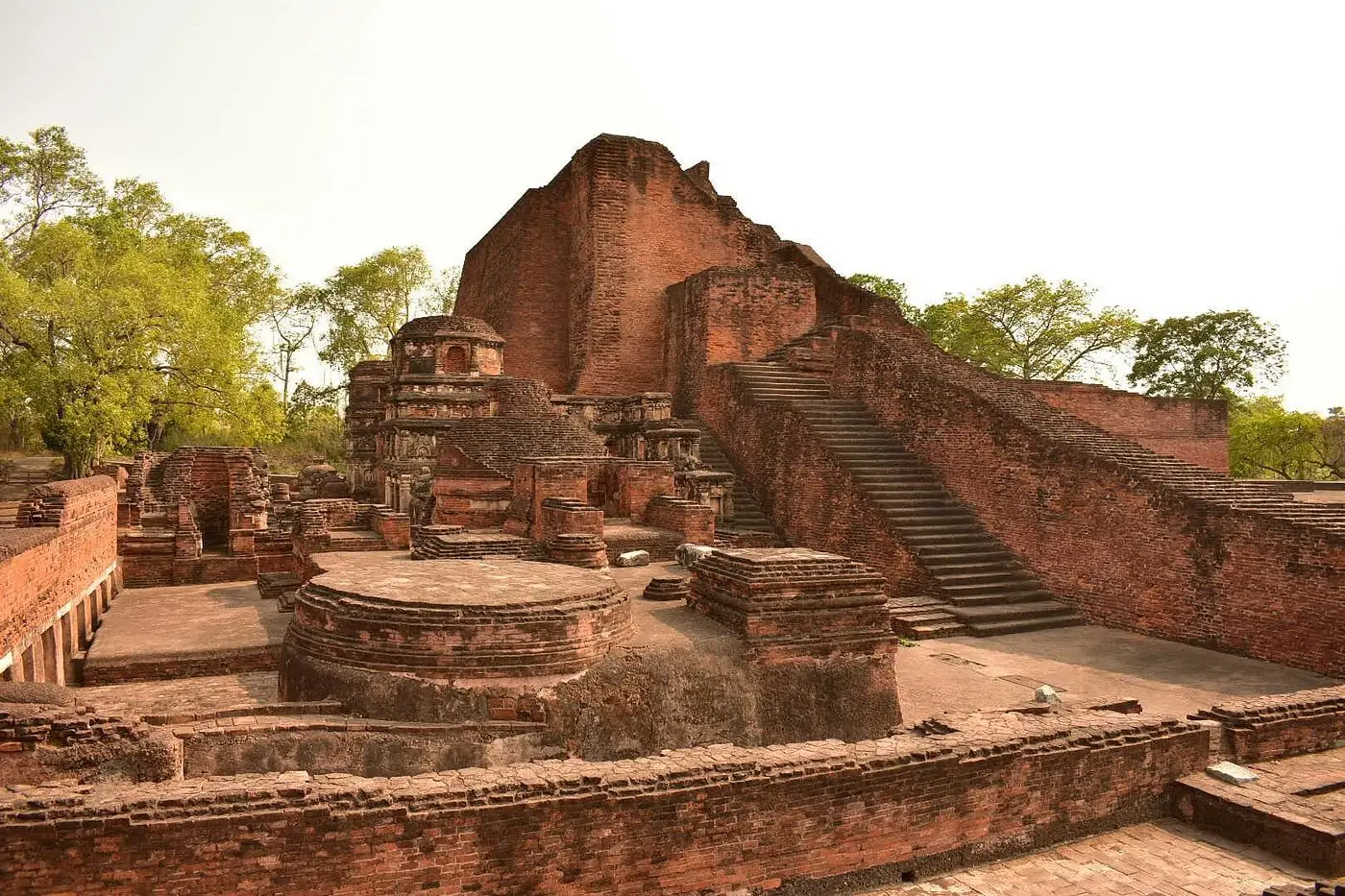
The ruins of Nalanda University, located in Nalanda district of Bihar, stand as a timeless testament to India’s rich tradition of knowledge and learning. Established in the 5th century CE during the Gupta dynasty, Nalanda was the world’s first residential university, drawing scholars, monks, and students from across Asia. With its grand libraries, lecture halls, and monasteries, Nalanda thrived for centuries as a center of excellence in philosophy, religion, science, mathematics, and medicine.
History and Legacy
Nalanda’s foundation is generally attributed to Kumaragupta I (415–455 CE) of the Gupta dynasty. The university reached its peak during the reigns of Harshavardhana and later under the Pala dynasty. At its height, Nalanda housed over 10,000 students and 2,000 teachers, making it one of the largest and most influential universities in the ancient world.
Renowned scholars such as Aryabhata (mathematics and astronomy), Nagarjuna (Mahayana Buddhism and alchemy), and Xuanzang (the Chinese traveler who studied and taught here in the 7th century) are closely associated with Nalanda’s history.
Structure and Architecture
The remains of Nalanda University cover a vast area of nearly 14 hectares, reflecting its once-flourishing academic and spiritual environment. Excavations have revealed:
Viharas (monasteries): Residential complexes where monks lived and studied.
Chaityas (temples): Places of worship and meditation.
Lecture Halls: Large rooms where teachers delivered discourses.
Libraries: Nalanda had one of the greatest libraries of the ancient world, known as Dharma Gunj (Mountain of Truth), which reportedly housed hundreds of thousands of manuscripts.
The library was so vast that when Nalanda was attacked and set ablaze by Bakhtiyar Khilji in the late 12th century, it is said to have burned for months, destroying countless priceless manuscripts.
Learning and Curriculum
Nalanda was unique not only for its scale but also for the diversity of its curriculum. The subjects taught here included:
Buddhist philosophy and logic
Vedic studies and Sanskrit grammar
Mathematics, astronomy, and medicine
Art, architecture, and linguistics
Students were admitted after a rigorous oral examination by the faculty, ensuring that only the most dedicated and capable learners were enrolled. This strict admission process added to Nalanda’s prestige.
Revival and UNESCO Recognition
After centuries of decline, Nalanda’s legacy was revived in the 21st century with the establishment of the modern Nalanda University in 2010, located near the ancient site. This international university continues the spirit of cross-cultural exchange and advanced learning, bringing together scholars from across the world.
In 2016, the ruins of Nalanda Mahavihara were declared a UNESCO World Heritage Site, acknowledging their universal value as a symbol of intellectual and cultural heritage.
How to Reach Nalanda University
By Road: Nalanda is well connected by road to Patna (90 km), Rajgir (12 km), and Gaya (95 km).
By Rail: The nearest railway station is Rajgir, while Gaya and Patna serve as major railheads.
By Air: The closest airports are Gaya International Airport (95 km) and Patna Airport (90 km).